
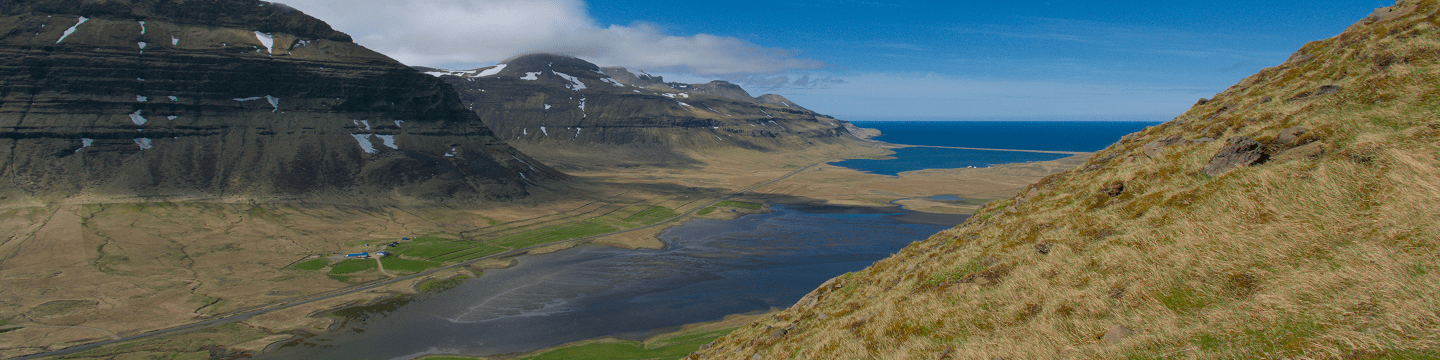
The fjords of Iceland are long, narrow inlets with steep mountains on both sides. Glaciers carved them during the Ice Age. Then the sea flooded the valleys. As a result, the coast is full of quiet bays, small villages and dramatic views.
How fjords form
Thick glaciers slowly cut deep valleys into the land. Meanwhile, when the ice melted, sea levels rose. So, sea water filled the valleys. In addition, the steep walls remain as mountains along the shore.
The Westfjords
The Westfjords in the northwest have the most dramatic fjords. For example, Dynjandi waterfall tumbles down a mountain above one of them. Read our Westfjords guide.
The Eastfjords
The Eastfjords are home to colourful villages like Seydisfjordur. Also, reindeer roam the hills. Read our Eastfjords guide.
Fjords of Iceland near Reykjavik
Hvalfjordur lies less than an hour north of the city. It has quiet roads, waterfalls and hiking trails. Read our post on Hvalfjordur.
Wildlife in the fjords of Iceland
Seals, seabirds and even whales visit the fjords. For instance, Eyjafjordur in the north is known for whale watching.
Best time to visit the fjords of Iceland
Summer brings long days and open roads. However, winter brings snow and fewer visitors, so plan carefully. Check Road.is for road conditions.
Why visit
The fjords show a slower side of Iceland. In short, they are perfect for road trips and peaceful views.
Villages
Small fishing villages sit at the end of many fjords. For example, Isafjordur is the main town in the Westfjords. Meanwhile, Siglufjordur in the north has a rich herring history. Read our Siglufjordur guide. Also, most villages have a pool, a café and a church. So, they make great places to stop.
Driving tips
Fjord roads wind along the coast, so driving takes longer than you expect. In addition, some mountain passes close in winter. Therefore, plan extra time and check the weather every day.
Explore West Iceland on our private Snaefellsnes tour, with up to 8 guests per car.